


Integrated PCN control trials show future options for potatoes
News - 19.05.26
Integrated control is the future for PCN management, TPP trials suggest
The Potato Partnership PCN trials highlight that an integrated approach, combining plant genetics with a nematicide programme, can give growers greater confidence in future potato cyst nematode control.
With questions over whether Nemathorin (fosthiazate) approval will be renewed when the current UK registration expires in 2029, future potato cyst nematode (PCN) strategies are coming into sharper focus.
This is an area The Potato Partnership (TPP) trials have been investigating for the past four years. With the 2025 data now released, the latest results provide further insight into how growers may need to manage PCN pressure in the future.
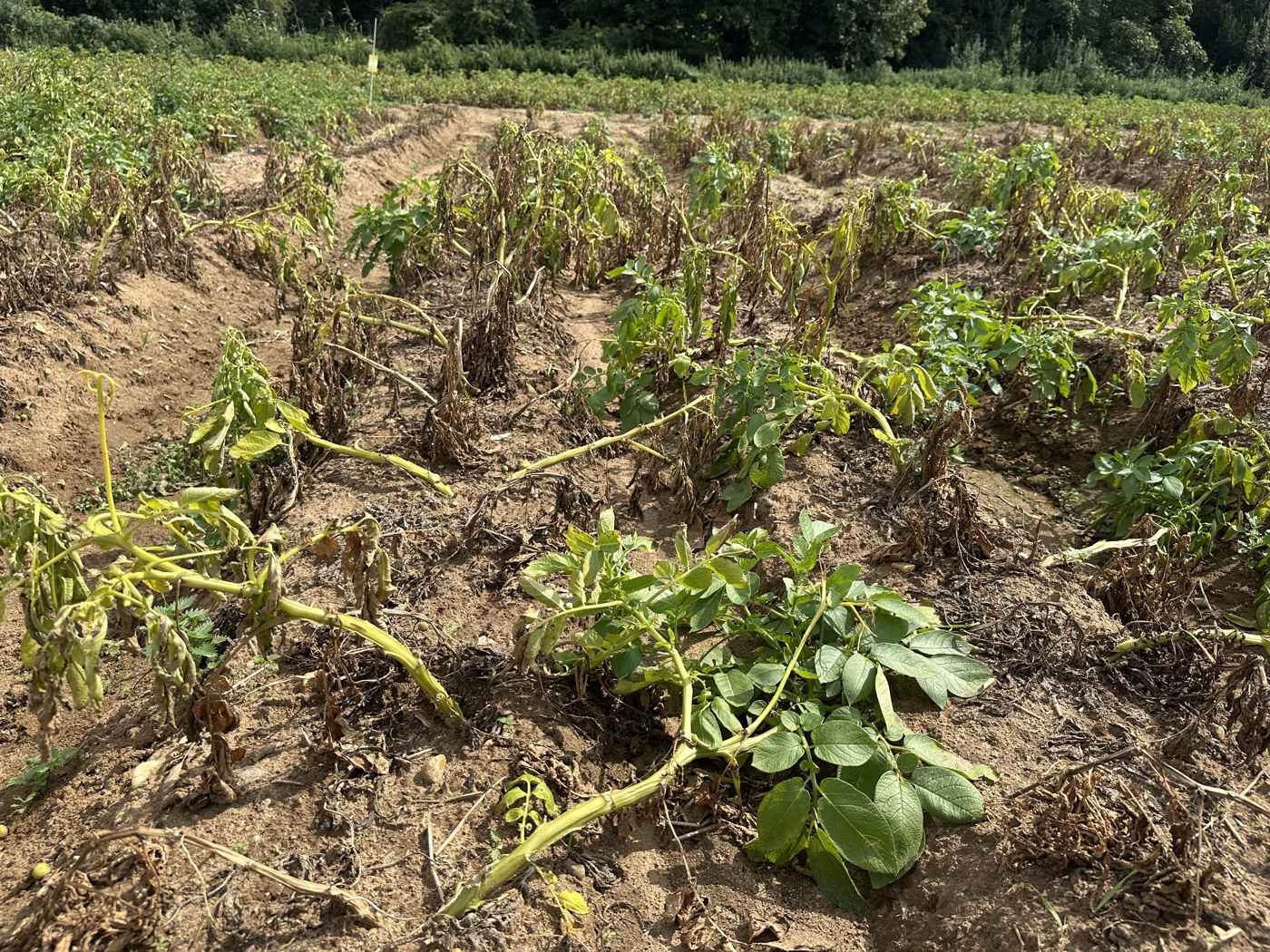
High PCN Pressure
High PCN pressure at the Suffolk trial site
Located near Waldringfield in Suffolk, last year’s trial site was on loamy sand soil with a distant history of double-cropping potatoes at short rotations. These are ideal conditions for multiplying PCN to very high levels, says Graham Tomlin of VCS Potatoes.
Average pre-sowing PCN levels were recorded at 35-39 eggs per gram of soil.
A stratified trial design was used to account for variations in PCN levels across the field. The integrated control trial ranged from 17-106 eggs/g of soil, while the variety trial in the same field ranged from 9-66 eggs/g of soil.
Globodera pallida was the only PCN species present in the field, although no details of the pathotype have been obtained to date. Graham cautions that pathotype differences between sites are a more subtle assessment, but likely to become more important in the future.
“We keep the cysts we collect from all our trials and send them to the James Hutton Institute, who are a member of PCN Action in Scotland.
“We hope that eventually we will get an available cost-effective test to detect the pathotype present in the field, so we can determine which resistant variety would be best for that site.”
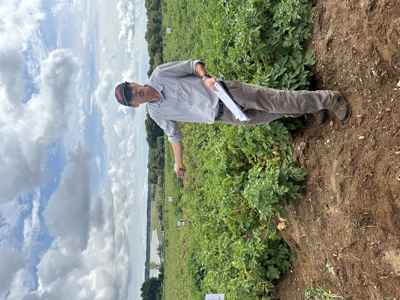
Graham Tomlin
Genetics tested under high PCN pressure
In line with the collaborative approach behind TPP, breeders were invited to include varieties that are close to market and that they believe will offer useful PCN tolerance or resistance.
Graham reminds growers that varietal resistance is the ability of a variety to affect PCN multiplication, while tolerant varieties can produce reasonable yields when grown in the presence of PCN.
Each variety was analysed in untreated plots and in plots treated with a standard nematicide programme of half-rate Nemathorin 10G, Velum Prime (fluopyram) and the adjuvant SP058. Graham notes that Syngenta does not support the application of Nemathorin 10G at half rate for PCN.
“There are a lot of new varieties that are producing big yields under PCN pressure. In this trial, Eternity, Invictus and Drummer all yielded well, whether treated or untreated.”
Even so, the average benefit of including a PCN treatment across all varieties was 10t/ha.
Analysing the difference between treated and untreated yields is one method for scoring a variety’s relative tolerance to PCN. However, Graham cautions that this does not always tell the full story, because some newer varieties may see a large percentage drop but still yield comfortably above older tolerant varieties such as Cara.
“Tolerance depends on a number of factors. Specific field nutrition and seasonal conditions can mean a specific variety tolerates PCN to a greater extent one year but not another.
“Some people have linked tolerance to determinacy, but I think it is more subjective than that. For example, Markies does not seem to be very good in terms of its tolerance, but it is a very indeterminate variety.”
Future-proofing PCN treatment
The industry-standard PCN treatments, Nemathorin and Velum Prime, were compared at full rate against a range of combination treatments. These included an organosilicon surfactant, a non-ionic wetter and biological treatments.
The aim is to examine how current control strategies can be advanced, while also considering alternative approaches if Nemathorin is lost or its use becomes more restricted, explains Don Pendergrast, Technical Manager for Non-Combinable Crops at Agrii.
“Across the years we have been running the trial, we have seen the combination of half-rate Nemathorin + Velum Prime + SP058 give us the best control of PCN.
“We did not see SP058 add much of a benefit this year, which we think is due to how dry it was.
“Even in really high-pressure situations like this trial, Velum Prime does work, and SP058 brings a benefit to control in most years. Combining Velum Prime and Nemathorin provides better control than either alone.”
Role of biological options in future programmes
Although the trials have shown little PCN control from some of the biological products tested so far, Don still wants to investigate their value for PCN control in future TPP trials. The extremely high PCN pressure used in the trial work is likely to have made performance more challenging.
He believes that, given the nature of biological activity on PCN, products may need to be examined at different timings, which the current trials do not do.
“Rather than apply them in-furrow like a conventional nematicide, we might need to find a way to apply them slightly later on, as a top-up, or in the autumn, to degrade the PCN ahead of planting.
“The primary method farmers manage PCN is by having a long rotation. We need to start thinking about whether there are products we could be using to reduce the PCN population before we get to the potato crop in a rotation.”
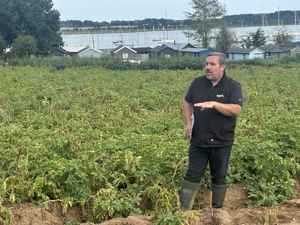
Don Pendergrast
Integrated PCN control for future potato crops
According to Don, the TPP trials demonstrate that growers have genetic and chemical tools that can work under high PCN pressure, with the potential for biological products to be added to that approach in the future.
“We are not about to drop off a cliff if we lose Nemathorin, but farmers will need to look at a combination of approaches, as we have demonstrated.”
To get involved with TPP and attend the summer PCN demonstration, visit www.thepotatopartnership.co.uk.
Join Our Community

Agrii X
We love engaging with clients and partners. Give us a follow and let's share stories for the community.

Agrii Instagram
A picture paints a thousand words. Follow us on Instagram to see what we are up to.

Agrii Facebook
Follow us on the worlds biggest social media site for the latest news and events straight to your feed.

Agrii LinkedIn
If you are all about the business, connect with us on LinkedIn to build your network
Stay In Touch

Journal Sign-Up
Receive email updates on topical news and information from around Agrii and UK Farming.

Listen To Our Podcasts
Listen to the Tramlines Podcast. Fortnightly chat about agriculture and trials with your host Tony Smith.

Agrii Insights
Read essential agri intelligence for profitable farming.

Find an Event
Join us for our upcoming events and tours.