


Hybrid rye delivers strong yields through dry season
News - 25.09.26
Hybrid rye performance holds firm through another dry season
Hybrid rye growers are reporting strong yields despite another hot, dry summer, reinforcing interest in the crop as growers look for more resilient options within arable rotations.
The crop has already attracted attention for its lower input requirement, rooting ability and flexibility as both a grain and wholecrop option. But three notably dry seasons in 2022, 2025 and 2026 have brought its drought resilience more sharply into focus.
Philip Marr, Agrii Renewable Biomass Consultant, says the latest season has added to a growing body of commercial and trials evidence.
“Hybrid rye has been delivering consistently for a number of years, but the recent dry seasons have really highlighted what it can offer where moisture becomes limiting,” he says.
Philip has managed hybrid rye trials at Agrii’s Brotherton iFarm near Knottingley for 16 years, evaluating more than 150 varieties during that time.
SU Karlsson, from Saaten Union and Elsoms, has topped Agrii trials for the past three consecutive years for both freshweight and biogas yield.
It has also produced high grain yields, giving growers flexibility to target either anaerobic digestion or grain markets.
Hybrid rye showing value in dry conditions
At Peacehill Farm near Wormit in Dundee, Arable Manager Hamish Knottenbelt currently grows 280ha of hybrid rye, accounting for just under a third of the farm’s cropping.
The plan is to increase that area to around 400ha for harvest 2027.
Hybrid rye is grown as wholecrop for the farm’s own biodigester and fits into the rotation either as a second cereal or following potatoes where drilling date allows.
Hamish drilled 67ha of SU Karlsson around 9 September last year and says the crop established strongly before coping well with the prolonged dry period.
“SU Karlsson ticks all the key boxes: low input costs, good biomass production, high brown rust resistance and a phenomenal ability to find moisture, even when there was virtually no rain between April and July.”
Harvested between 6 and 10 July, the crop produced an average freshweight yield of 51.03t/ha.
“It looks an exceptionally good variety and we’ll be substantially increasing our area of it this autumn,” he says.
Grain yields remain strong
The crop is also delivering for grain growers.
Northallerton farmer Wayne Hardy has grown hybrid rye successfully for six years at Hall Farm, Hutton Bonville.
He farms 113ha and typically grows 30–40ha of rye each year, supplying grain to local pig producers for inclusion in feed rations.
“Hybrid rye is a flexible, reliable, low-input, semi-break crop that produces a lot of straw and fits the second cereal slot extremely well, given its very low susceptibility to take-all,” he says.
Wayne drilled 32ha of SU Karlsson on 23 and 24 September last year across medium-heavy loam soils.
The crop established well and received 90kg/ha of liquid nitrogen with an inhibitor in early March, followed by 7kg/ha of Physio-N in late April.
Wayne says the aim was to help maintain crop performance through a period of continued heat and drought.
“The crop stayed green long enough to give me confidence that it was always hanging onto enough moisture to keep going.”
Harvested on 29 July, the crop averaged 9.58t/ha, with Wayne reporting no negative impact on grain quality or straw yield.
Lower nitrogen demand adds to appeal
Agrii Crop Nutrition Specialist John Charlton works with Wayne and a number of other hybrid rye growers across North Yorkshire.
He says SU Karlsson has performed strongly since its arrival on the Recommended List in 2024.
“SU Karlsson’s speed of development through autumn and winter, enabling it to suppress weeds, is a big plus,” he says.
“With a 7 for brown rust resistance, strong disease resilience and the ability to perform for both grain and AD, it gives growers useful flexibility.”
He adds that the variety has performed consistently in both trials and commercial situations.
The crop’s nitrogen requirement is another area attracting interest.
Agrii Agronomist Tom Bernhardt, who advises growers across mid and East Devon, says most hybrid rye crops receive around 100kg/ha less nitrogen than a comparable area of winter wheat.
“With the cost of producing winter wheat remaining high, hybrid rye is becoming increasingly attractive, particularly where growers are looking to reduce input exposure without sacrificing output.”
Strong performance across contrasting soils
At Nutwell Farms near Exmouth, Ben Pritchard introduced hybrid rye into the rotation in 2025.
He direct drilled 36ha of SU Karlsson across both medium soils and a more challenging block of heavy clay.
Despite the contrast in soil type, he says there was very little difference in final performance.
“Hybrid rye is superb for autumn weed control. It establishes rapidly and is able to outcompete our weed burden,” he says.
“With a two-spray fungicide programme and just two main splits of nitrogen totalling 130–140kg/ha, there are fewer passes through the crop.”
Harvested on 7 July, the crop produced freshweight yields of 30.5t/ha, broadly in line with the previous season.
Ben plans to grow SU Karlsson again for 2027 and increase the farm’s area of forage crops, while removing wheat from the rotation.
“With a firm eye on maintaining soil health, we will continue to build break crops such as OSR around both our maize and hybrid rye to break up disease pressure and maintain effective weed control.”
More than an AD crop
One of the barriers to wider hybrid rye uptake is the perception that it is principally a crop for anaerobic digestion.
Tom says that risks overlooking its potential in grain markets.
“One of the barriers to growth in the hybrid rye sector is that many growers see it as purely about wholecrop for AD without really considering other end markets.”
He says the crop can offer useful opportunities for animal feed, particularly where growers are close to pig units that mill and mix their own rations.
“In SU Karlsson, growers have a high-yielding, high-output, dual-purpose variety suitable for both grain and AD markets.”
Philip believes that dual-use flexibility will become increasingly important as more biomethane injection and AD plants come forward over the next two years.
“As weather patterns change and input costs remain under pressure, hybrid rye is well placed to play a bigger role in arable rotations, provided market demand continues to develop.”
Toby Reich, Head of Agricultural Sales at Elsoms Seeds, says recent commercial results are helping reinforce confidence in the crop.
“The combination of drought resilience, consistent yield performance and genuine dual-purpose flexibility is helping more growers recognise the potential of hybrid rye within future arable rotations.”
Could hybrid rye have a greater role in future rotations?
The latest results suggest the crop is earning attention for more than one reason.
Its combination of drought resilience, lower nitrogen requirement, competitive autumn growth and flexibility across grain and AD markets is making hybrid rye increasingly relevant to growers reviewing cereal choice and rotation risk.
For farms facing lighter soils, rising input costs or repeated dry seasons, the question may be less whether hybrid rye can perform, and more where it best fits within the rotation.
Speak to your Agrii agronomist
For advice on hybrid rye varieties, crop nutrition, rotational fit or end-market options, speak to your Agrii agronomist or local seed specialist.
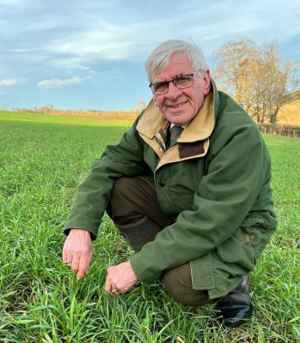
Philip Marr | Consultant
Hybrid rye performance holds firm through another dry season
Hybrid rye growers are reporting strong yields despite another hot, dry summer, reinforcing interest in the crop as growers look for more resilient options within arable rotations.
The crop has already attracted attention for its lower input requirement, rooting ability and flexibility as both a grain and wholecrop option. But three notably dry seasons in 2022, 2025 and 2026 have brought its drought resilience more sharply into focus.
Philip Marr, Agrii Renewable Biomass Consultant, says the latest season has added to a growing body of commercial and trials evidence.
“Hybrid rye has been delivering consistently for a number of years, but the recent dry seasons have really highlighted what it can offer where moisture becomes limiting,” he says.
Philip has managed hybrid rye trials at Agrii’s Brotherton iFarm near Knottingley for 16 years, evaluating more than 150 varieties during that time.
SU Karlsson, from Saaten Union and Elsoms, has topped Agrii trials for the past three consecutive years for both freshweight and biogas yield.
It has also produced high grain yields, giving growers flexibility to target either anaerobic digestion or grain markets.
Hybrid rye showing value in dry conditions
At Peacehill Farm near Wormit in Dundee, Arable Manager Hamish Knottenbelt currently grows 280ha of hybrid rye, accounting for just under a third of the farm’s cropping.
The plan is to increase that area to around 400ha for harvest 2027.
Hybrid rye is grown as wholecrop for the farm’s own biodigester and fits into the rotation either as a second cereal or following potatoes where drilling date allows.
Hamish drilled 67ha of SU Karlsson around 9 September last year and says the crop established strongly before coping well with the prolonged dry period.
“SU Karlsson ticks all the key boxes: low input costs, good biomass production, high brown rust resistance and a phenomenal ability to find moisture, even when there was virtually no rain between April and July.”
Harvested between 6 and 10 July, the crop produced an average freshweight yield of 51.03t/ha.
“It looks an exceptionally good variety and we’ll be substantially increasing our area of it this autumn,” he says.
Grain yields remain strong
The crop is also delivering for grain growers.
Northallerton farmer Wayne Hardy has grown hybrid rye successfully for six years at Hall Farm, Hutton Bonville.
He farms 113ha and typically grows 30–40ha of rye each year, supplying grain to local pig producers for inclusion in feed rations.
“Hybrid rye is a flexible, reliable, low-input, semi-break crop that produces a lot of straw and fits the second cereal slot extremely well, given its very low susceptibility to take-all,” he says.
Wayne drilled 32ha of SU Karlsson on 23 and 24 September last year across medium-heavy loam soils.
The crop established well and received 90kg/ha of liquid nitrogen with an inhibitor in early March, followed by 7kg/ha of Physio-N in late April.
Wayne says the aim was to help maintain crop performance through a period of continued heat and drought.
“The crop stayed green long enough to give me confidence that it was always hanging onto enough moisture to keep going.”
Harvested on 29 July, the crop averaged 9.58t/ha, with Wayne reporting no negative impact on grain quality or straw yield.
Lower nitrogen demand adds to appeal
Agrii Crop Nutrition Specialist John Charlton works with Wayne and a number of other hybrid rye growers across North Yorkshire.
He says SU Karlsson has performed strongly since its arrival on the Recommended List in 2024.
“SU Karlsson’s speed of development through autumn and winter, enabling it to suppress weeds, is a big plus,” he says.
“With a 7 for brown rust resistance, strong disease resilience and the ability to perform for both grain and AD, it gives growers useful flexibility.”
He adds that the variety has performed consistently in both trials and commercial situations.
The crop’s nitrogen requirement is another area attracting interest.
Agrii Agronomist Tom Bernhardt, who advises growers across mid and East Devon, says most hybrid rye crops receive around 100kg/ha less nitrogen than a comparable area of winter wheat.
“With the cost of producing winter wheat remaining high, hybrid rye is becoming increasingly attractive, particularly where growers are looking to reduce input exposure without sacrificing output.”
Strong performance across contrasting soils
At Nutwell Farms near Exmouth, Ben Pritchard introduced hybrid rye into the rotation in 2025.
He direct drilled 36ha of SU Karlsson across both medium soils and a more challenging block of heavy clay.
Despite the contrast in soil type, he says there was very little difference in final performance.
“Hybrid rye is superb for autumn weed control. It establishes rapidly and is able to outcompete our weed burden,” he says.
“With a two-spray fungicide programme and just two main splits of nitrogen totalling 130–140kg/ha, there are fewer passes through the crop.”
Harvested on 7 July, the crop produced freshweight yields of 30.5t/ha, broadly in line with the previous season.
Ben plans to grow SU Karlsson again for 2027 and increase the farm’s area of forage crops, while removing wheat from the rotation.
“With a firm eye on maintaining soil health, we will continue to build break crops such as OSR around both our maize and hybrid rye to break up disease pressure and maintain effective weed control.”
More than an AD crop
One of the barriers to wider hybrid rye uptake is the perception that it is principally a crop for anaerobic digestion.
Tom says that risks overlooking its potential in grain markets.
“One of the barriers to growth in the hybrid rye sector is that many growers see it as purely about wholecrop for AD without really considering other end markets.”
He says the crop can offer useful opportunities for animal feed, particularly where growers are close to pig units that mill and mix their own rations.
“In SU Karlsson, growers have a high-yielding, high-output, dual-purpose variety suitable for both grain and AD markets.”
Philip believes that dual-use flexibility will become increasingly important as more biomethane injection and AD plants come forward over the next two years.
“As weather patterns change and input costs remain under pressure, hybrid rye is well placed to play a bigger role in arable rotations, provided market demand continues to develop.”
Toby Reich, Head of Agricultural Sales at Elsoms Seeds, says recent commercial results are helping reinforce confidence in the crop.
“The combination of drought resilience, consistent yield performance and genuine dual-purpose flexibility is helping more growers recognise the potential of hybrid rye within future arable rotations.”
Could hybrid rye have a greater role in future rotations?
The latest results suggest the crop is earning attention for more than one reason.
Its combination of drought resilience, lower nitrogen requirement, competitive autumn growth and flexibility across grain and AD markets is making hybrid rye increasingly relevant to growers reviewing cereal choice and rotation risk.
For farms facing lighter soils, rising input costs or repeated dry seasons, the question may be less whether hybrid rye can perform, and more where it best fits within the rotation.
Speak to your Agrii agronomist
For advice on hybrid rye varieties, crop nutrition, rotational fit or end-market options, speak to your Agrii agronomist or local seed specialist.

John Charlton | Agrii
Hybrid rye performance holds firm through another dry season
Hybrid rye growers are reporting strong yields despite another hot, dry summer, reinforcing interest in the crop as growers look for more resilient options within arable rotations.
The crop has already attracted attention for its lower input requirement, rooting ability and flexibility as both a grain and wholecrop option. But three notably dry seasons in 2022, 2025 and 2026 have brought its drought resilience more sharply into focus.
Philip Marr, Agrii Renewable Biomass Consultant, says the latest season has added to a growing body of commercial and trials evidence.
“Hybrid rye has been delivering consistently for a number of years, but the recent dry seasons have really highlighted what it can offer where moisture becomes limiting,” he says.
Philip has managed hybrid rye trials at Agrii’s Brotherton iFarm near Knottingley for 16 years, evaluating more than 150 varieties during that time.
SU Karlsson, from Saaten Union and Elsoms, has topped Agrii trials for the past three consecutive years for both freshweight and biogas yield.
It has also produced high grain yields, giving growers flexibility to target either anaerobic digestion or grain markets.
Hybrid rye showing value in dry conditions
At Peacehill Farm near Wormit in Dundee, Arable Manager Hamish Knottenbelt currently grows 280ha of hybrid rye, accounting for just under a third of the farm’s cropping.
The plan is to increase that area to around 400ha for harvest 2027.
Hybrid rye is grown as wholecrop for the farm’s own biodigester and fits into the rotation either as a second cereal or following potatoes where drilling date allows.
Hamish drilled 67ha of SU Karlsson around 9 September last year and says the crop established strongly before coping well with the prolonged dry period.
“SU Karlsson ticks all the key boxes: low input costs, good biomass production, high brown rust resistance and a phenomenal ability to find moisture, even when there was virtually no rain between April and July.”
Harvested between 6 and 10 July, the crop produced an average freshweight yield of 51.03t/ha.
“It looks an exceptionally good variety and we’ll be substantially increasing our area of it this autumn,” he says.
Grain yields remain strong
The crop is also delivering for grain growers.
Northallerton farmer Wayne Hardy has grown hybrid rye successfully for six years at Hall Farm, Hutton Bonville.
He farms 113ha and typically grows 30–40ha of rye each year, supplying grain to local pig producers for inclusion in feed rations.
“Hybrid rye is a flexible, reliable, low-input, semi-break crop that produces a lot of straw and fits the second cereal slot extremely well, given its very low susceptibility to take-all,” he says.
Wayne drilled 32ha of SU Karlsson on 23 and 24 September last year across medium-heavy loam soils.
The crop established well and received 90kg/ha of liquid nitrogen with an inhibitor in early March, followed by 7kg/ha of Physio-N in late April.
Wayne says the aim was to help maintain crop performance through a period of continued heat and drought.
“The crop stayed green long enough to give me confidence that it was always hanging onto enough moisture to keep going.”
Harvested on 29 July, the crop averaged 9.58t/ha, with Wayne reporting no negative impact on grain quality or straw yield.
Lower nitrogen demand adds to appeal
Agrii Crop Nutrition Specialist John Charlton works with Wayne and a number of other hybrid rye growers across North Yorkshire.
He says SU Karlsson has performed strongly since its arrival on the Recommended List in 2024.
“SU Karlsson’s speed of development through autumn and winter, enabling it to suppress weeds, is a big plus,” he says.
“With a 7 for brown rust resistance, strong disease resilience and the ability to perform for both grain and AD, it gives growers useful flexibility.”
He adds that the variety has performed consistently in both trials and commercial situations.
The crop’s nitrogen requirement is another area attracting interest.
Agrii Agronomist Tom Bernhardt, who advises growers across mid and East Devon, says most hybrid rye crops receive around 100kg/ha less nitrogen than a comparable area of winter wheat.
“With the cost of producing winter wheat remaining high, hybrid rye is becoming increasingly attractive, particularly where growers are looking to reduce input exposure without sacrificing output.”
Strong performance across contrasting soils
At Nutwell Farms near Exmouth, Ben Pritchard introduced hybrid rye into the rotation in 2025.
He direct drilled 36ha of SU Karlsson across both medium soils and a more challenging block of heavy clay.
Despite the contrast in soil type, he says there was very little difference in final performance.
“Hybrid rye is superb for autumn weed control. It establishes rapidly and is able to outcompete our weed burden,” he says.
“With a two-spray fungicide programme and just two main splits of nitrogen totalling 130–140kg/ha, there are fewer passes through the crop.”
Harvested on 7 July, the crop produced freshweight yields of 30.5t/ha, broadly in line with the previous season.
Ben plans to grow SU Karlsson again for 2027 and increase the farm’s area of forage crops, while removing wheat from the rotation.
“With a firm eye on maintaining soil health, we will continue to build break crops such as OSR around both our maize and hybrid rye to break up disease pressure and maintain effective weed control.”
More than an AD crop
One of the barriers to wider hybrid rye uptake is the perception that it is principally a crop for anaerobic digestion.
Tom says that risks overlooking its potential in grain markets.
“One of the barriers to growth in the hybrid rye sector is that many growers see it as purely about wholecrop for AD without really considering other end markets.”
He says the crop can offer useful opportunities for animal feed, particularly where growers are close to pig units that mill and mix their own rations.
“In SU Karlsson, growers have a high-yielding, high-output, dual-purpose variety suitable for both grain and AD markets.”
Philip believes that dual-use flexibility will become increasingly important as more biomethane injection and AD plants come forward over the next two years.
“As weather patterns change and input costs remain under pressure, hybrid rye is well placed to play a bigger role in arable rotations, provided market demand continues to develop.”
Toby Reich, Head of Agricultural Sales at Elsoms Seeds, says recent commercial results are helping reinforce confidence in the crop.
“The combination of drought resilience, consistent yield performance and genuine dual-purpose flexibility is helping more growers recognise the potential of hybrid rye within future arable rotations.”
Could hybrid rye have a greater role in future rotations?
The latest results suggest the crop is earning attention for more than one reason.
Its combination of drought resilience, lower nitrogen requirement, competitive autumn growth and flexibility across grain and AD markets is making hybrid rye increasingly relevant to growers reviewing cereal choice and rotation risk.
For farms facing lighter soils, rising input costs or repeated dry seasons, the question may be less whether hybrid rye can perform, and more where it best fits within the rotation.
Speak to your Agrii agronomist
For advice on hybrid rye varieties, crop nutrition, rotational fit or end-market options, speak to your Agrii agronomist or local seed specialist.
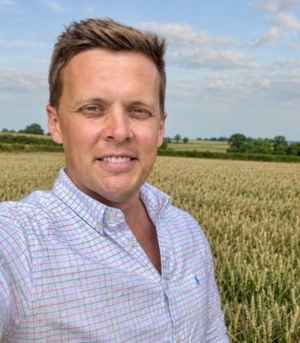
Tom Bernhardt | Agrii
Hybrid rye performance holds firm through another dry season
Hybrid rye growers are reporting strong yields despite another hot, dry summer, reinforcing interest in the crop as growers look for more resilient options within arable rotations.
The crop has already attracted attention for its lower input requirement, rooting ability and flexibility as both a grain and wholecrop option. But three notably dry seasons in 2022, 2025 and 2026 have brought its drought resilience more sharply into focus.
Philip Marr, Agrii Renewable Biomass Consultant, says the latest season has added to a growing body of commercial and trials evidence.
“Hybrid rye has been delivering consistently for a number of years, but the recent dry seasons have really highlighted what it can offer where moisture becomes limiting,” he says.
Philip has managed hybrid rye trials at Agrii’s Brotherton iFarm near Knottingley for 16 years, evaluating more than 150 varieties during that time.
SU Karlsson, from Saaten Union and Elsoms, has topped Agrii trials for the past three consecutive years for both freshweight and biogas yield.
It has also produced high grain yields, giving growers flexibility to target either anaerobic digestion or grain markets.
Hybrid rye showing value in dry conditions
At Peacehill Farm near Wormit in Dundee, Arable Manager Hamish Knottenbelt currently grows 280ha of hybrid rye, accounting for just under a third of the farm’s cropping.
The plan is to increase that area to around 400ha for harvest 2027.
Hybrid rye is grown as wholecrop for the farm’s own biodigester and fits into the rotation either as a second cereal or following potatoes where drilling date allows.
Hamish drilled 67ha of SU Karlsson around 9 September last year and says the crop established strongly before coping well with the prolonged dry period.
“SU Karlsson ticks all the key boxes: low input costs, good biomass production, high brown rust resistance and a phenomenal ability to find moisture, even when there was virtually no rain between April and July.”
Harvested between 6 and 10 July, the crop produced an average freshweight yield of 51.03t/ha.
“It looks an exceptionally good variety and we’ll be substantially increasing our area of it this autumn,” he says.
Grain yields remain strong
The crop is also delivering for grain growers.
Northallerton farmer Wayne Hardy has grown hybrid rye successfully for six years at Hall Farm, Hutton Bonville.
He farms 113ha and typically grows 30–40ha of rye each year, supplying grain to local pig producers for inclusion in feed rations.
“Hybrid rye is a flexible, reliable, low-input, semi-break crop that produces a lot of straw and fits the second cereal slot extremely well, given its very low susceptibility to take-all,” he says.
Wayne drilled 32ha of SU Karlsson on 23 and 24 September last year across medium-heavy loam soils.
The crop established well and received 90kg/ha of liquid nitrogen with an inhibitor in early March, followed by 7kg/ha of Physio-N in late April.
Wayne says the aim was to help maintain crop performance through a period of continued heat and drought.
“The crop stayed green long enough to give me confidence that it was always hanging onto enough moisture to keep going.”
Harvested on 29 July, the crop averaged 9.58t/ha, with Wayne reporting no negative impact on grain quality or straw yield.
Lower nitrogen demand adds to appeal
Agrii Crop Nutrition Specialist John Charlton works with Wayne and a number of other hybrid rye growers across North Yorkshire.
He says SU Karlsson has performed strongly since its arrival on the Recommended List in 2024.
“SU Karlsson’s speed of development through autumn and winter, enabling it to suppress weeds, is a big plus,” he says.
“With a 7 for brown rust resistance, strong disease resilience and the ability to perform for both grain and AD, it gives growers useful flexibility.”
He adds that the variety has performed consistently in both trials and commercial situations.
The crop’s nitrogen requirement is another area attracting interest.
Agrii Agronomist Tom Bernhardt, who advises growers across mid and East Devon, says most hybrid rye crops receive around 100kg/ha less nitrogen than a comparable area of winter wheat.
“With the cost of producing winter wheat remaining high, hybrid rye is becoming increasingly attractive, particularly where growers are looking to reduce input exposure without sacrificing output.”
Strong performance across contrasting soils
At Nutwell Farms near Exmouth, Ben Pritchard introduced hybrid rye into the rotation in 2025.
He direct drilled 36ha of SU Karlsson across both medium soils and a more challenging block of heavy clay.
Despite the contrast in soil type, he says there was very little difference in final performance.
“Hybrid rye is superb for autumn weed control. It establishes rapidly and is able to outcompete our weed burden,” he says.
“With a two-spray fungicide programme and just two main splits of nitrogen totalling 130–140kg/ha, there are fewer passes through the crop.”
Harvested on 7 July, the crop produced freshweight yields of 30.5t/ha, broadly in line with the previous season.
Ben plans to grow SU Karlsson again for 2027 and increase the farm’s area of forage crops, while removing wheat from the rotation.
“With a firm eye on maintaining soil health, we will continue to build break crops such as OSR around both our maize and hybrid rye to break up disease pressure and maintain effective weed control.”
More than an AD crop
One of the barriers to wider hybrid rye uptake is the perception that it is principally a crop for anaerobic digestion.
Tom says that risks overlooking its potential in grain markets.
“One of the barriers to growth in the hybrid rye sector is that many growers see it as purely about wholecrop for AD without really considering other end markets.”
He says the crop can offer useful opportunities for animal feed, particularly where growers are close to pig units that mill and mix their own rations.
“In SU Karlsson, growers have a high-yielding, high-output, dual-purpose variety suitable for both grain and AD markets.”
Philip believes that dual-use flexibility will become increasingly important as more biomethane injection and AD plants come forward over the next two years.
“As weather patterns change and input costs remain under pressure, hybrid rye is well placed to play a bigger role in arable rotations, provided market demand continues to develop.”
Toby Reich, Head of Agricultural Sales at Elsoms Seeds, says recent commercial results are helping reinforce confidence in the crop.
“The combination of drought resilience, consistent yield performance and genuine dual-purpose flexibility is helping more growers recognise the potential of hybrid rye within future arable rotations.”
Could hybrid rye have a greater role in future rotations?
The latest results suggest the crop is earning attention for more than one reason.
Its combination of drought resilience, lower nitrogen requirement, competitive autumn growth and flexibility across grain and AD markets is making hybrid rye increasingly relevant to growers reviewing cereal choice and rotation risk.
For farms facing lighter soils, rising input costs or repeated dry seasons, the question may be less whether hybrid rye can perform, and more where it best fits within the rotation.
Speak to your Agrii agronomist
For advice on hybrid rye varieties, crop nutrition, rotational fit or end-market options, speak to your Agrii agronomist or local seed specialist.
Join Our Community

Agrii X
We love engaging with clients and partners. Give us a follow and let's share stories for the community.

Agrii Instagram
A picture paints a thousand words. Follow us on Instagram to see what we are up to.

Agrii Facebook
Follow us on the worlds biggest social media site for the latest news and events straight to your feed.

Agrii LinkedIn
If you are all about the business, connect with us on LinkedIn to build your network
Stay In Touch

Journal Sign-Up
Receive email updates on topical news and information from around Agrii and UK Farming.

Listen To Our Podcasts
Listen to the Tramlines Podcast. Fortnightly chat about agriculture and trials with your host Tony Smith.

Agrii Insights
Read essential agri intelligence for profitable farming.

Find an Event
Join us for our upcoming events and tours.